Congestion Pricing in the South Bronx
What is Congestion Pricing?
On January 5, 2025, New York City became the first city in the United States to implement cordon-based congestion pricing. Under the program, most vehicles entering Manhattan at or below 60th Street are charged a toll when entering what the MTA calls the Congestion Relief Zone (CRZ).
The program has two stated goals: to reduce vehicle traffic in the core of Manhattan and generate revenue for the MTA to fund public transit improvements.
The MTA argued it would also improve air quality by reducing the number of cars and trucks on the road.
South Bronx Unite supports efforts to reduce traffic and emissions in New York City. Congestion pricing’s goals, including cleaner air, less traffic, and more transit funding, are goals we share. But citywide averages and focuses on the Central Business District must not obscure the neighborhood-level impacts. Further, the promises of mitigation must be backed by data and accountability.
Why We Opposed Congestion Pricing
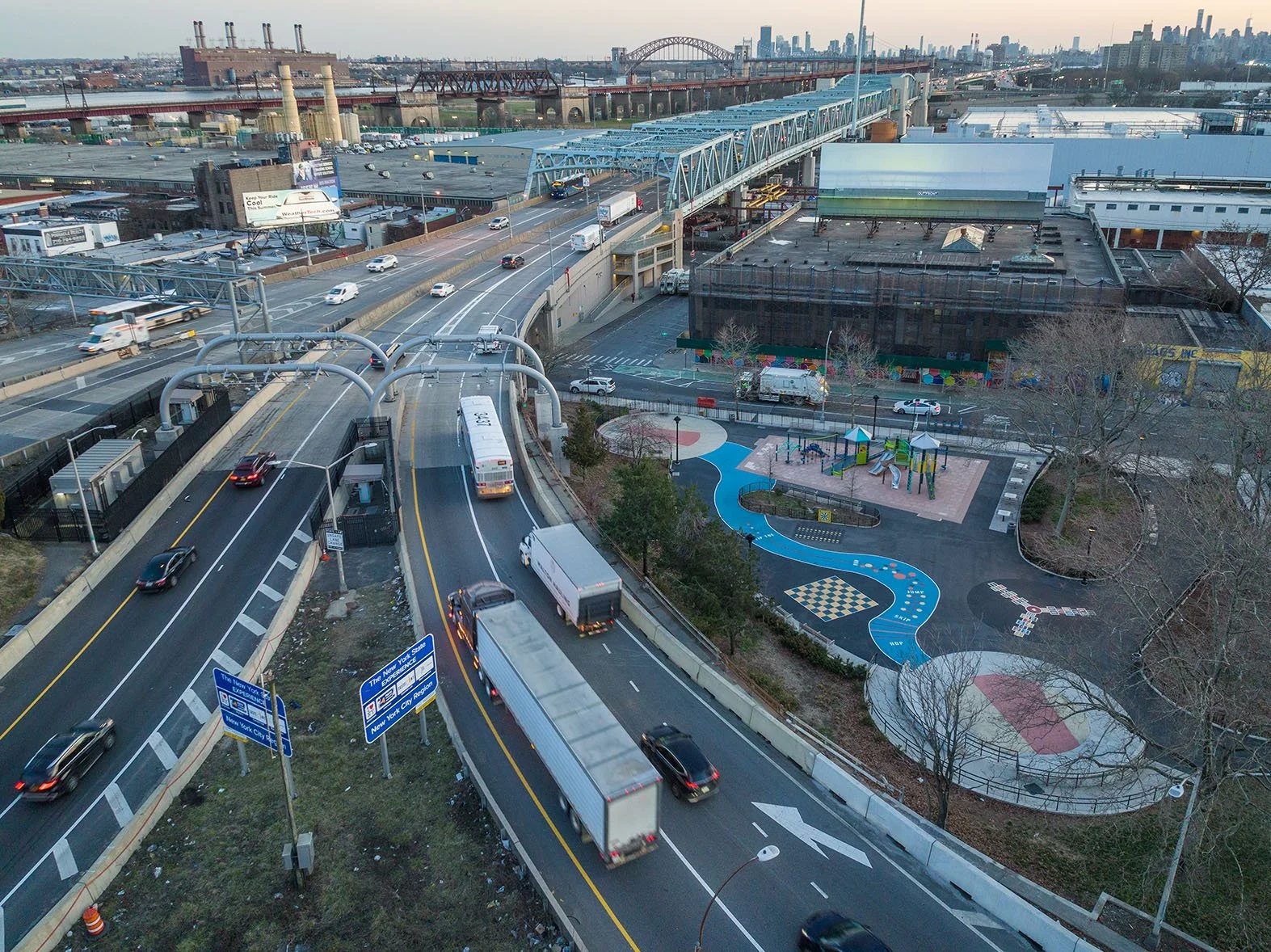
The MTA researched where the traffic would go. In chapter 17 of their environmental assessment, they acknowledged that congestion pricing would redirect traffic away from Manhattan and toward surrounding communities.
It specifically identified the South Bronx as one of the areas where these traffic diversions "would be most pronounced."
For a community already overburdened with pollution, surrounded by major highways and bridges that bring traffic and pollution to our neighborhood, this was unacceptable.
South Bronx Unite has a decade-long history of documenting the health effects of truck traffic and industrial activity in the neighborhood, including a peer-reviewed Columbia study that found a 10–40% traffic increase and measurable increases in noise and atmospheric black carbon following the FreshDirect warehouse relocation to the South Bronx waterfront.
We could not stand by as yet another program threatened to harm the air we breathe.
One Year In: What Does the Data Show?
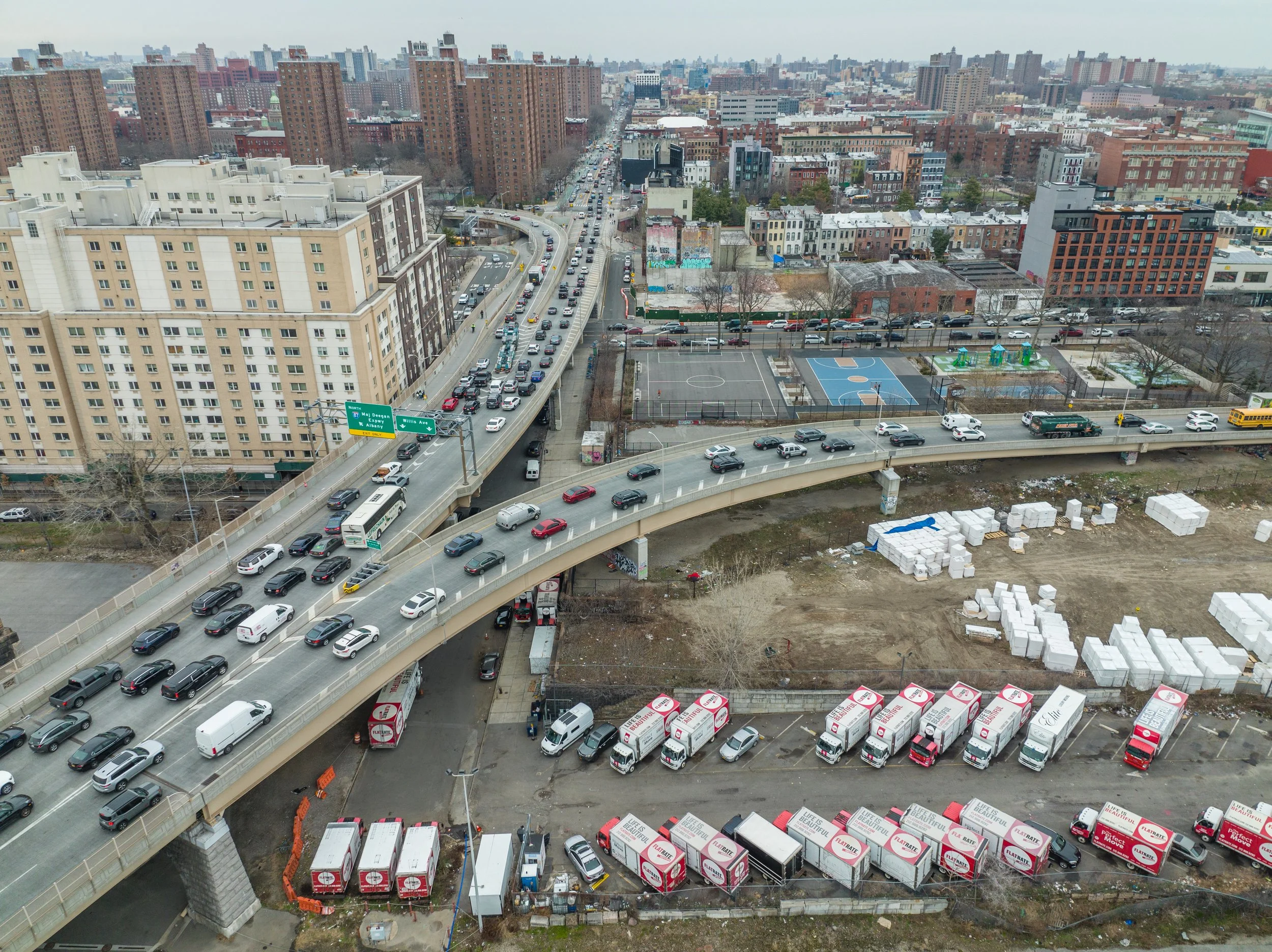
The MTA has focused on the results in the congestion relief zone. In the zone, traffic is down and the air quality has improved.
But we're not in the “congestion relief zone.” We're in the South Bronx.
What Our Air Quality Monitors Found
South Bronx Unite has been operating a community-managed air quality sensor network since 2023, in partnership with Columbia University Mailman School of Public Health.
We started this network for a situation like this: so that we could know how changes in the city affect the air we breathe and use that data to stand up for the South Bronx.
A new, 2026 study undergoing peer review, Impacts of New York City's Congestion Pricing Policy on PM2.5 in the South Bronx: Evidence from a Community-Managed Air Sensor Network, is the first analysis using community-owned sensor data to assess congestion pricing's air quality impacts in the South Bronx.
It’s co-authored by researchers at Columbia University, Brown University, and the University of Colorado Boulder, alongside South Bronx Unite.
Here’s what the data revealed.
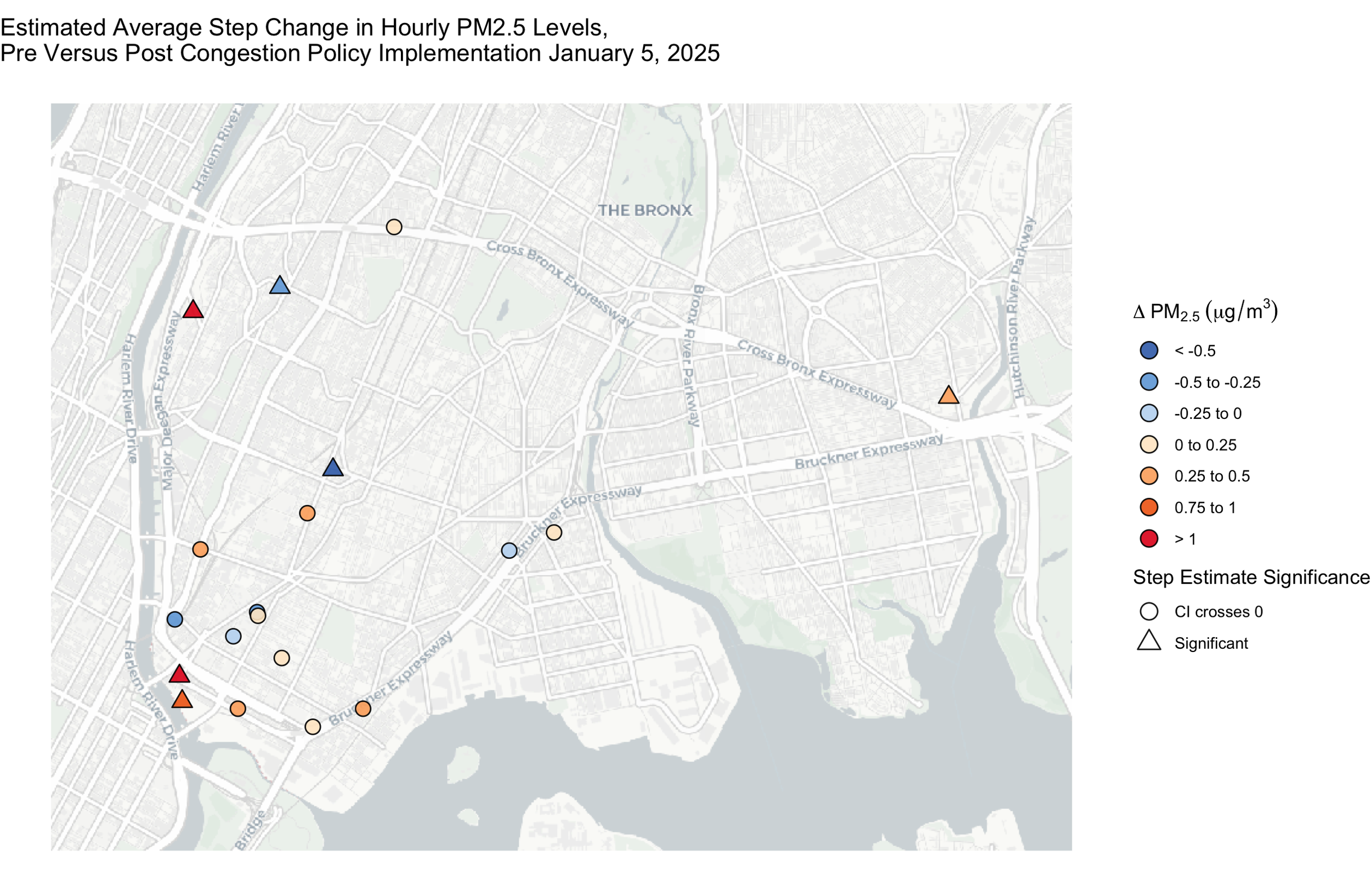
The red triangles show monitors with statistically significant increases in particular matter less than 2.5 micrometers (PM2.5). The overall increase in PM2.5 across the network is statistically significant.
Air Quality Has Worsened In The South Bronx
The study analyzed 19 of our monitors and compared hourly PM2.5 concentrations from January 2024 through December 2025. Of our network of monitors, these 19 had complete pre- and post-policy data.
The overall average increase in hourly PM2.5 levels was 0.22 μg/m³. This is statistically significant.
Near major highway intersections, the data looked even worse.
Four monitors located near major expressways showed statistically significant increases as high as 1.29 μg/m³.
Two monitors, including one at a community garden, showed significant decreases. This is why it’s so important to have a dense network of monitors, not just a handful.
Together, the data show a clear sign that South Bronx air quality worsened in 2025 compared to 2024.
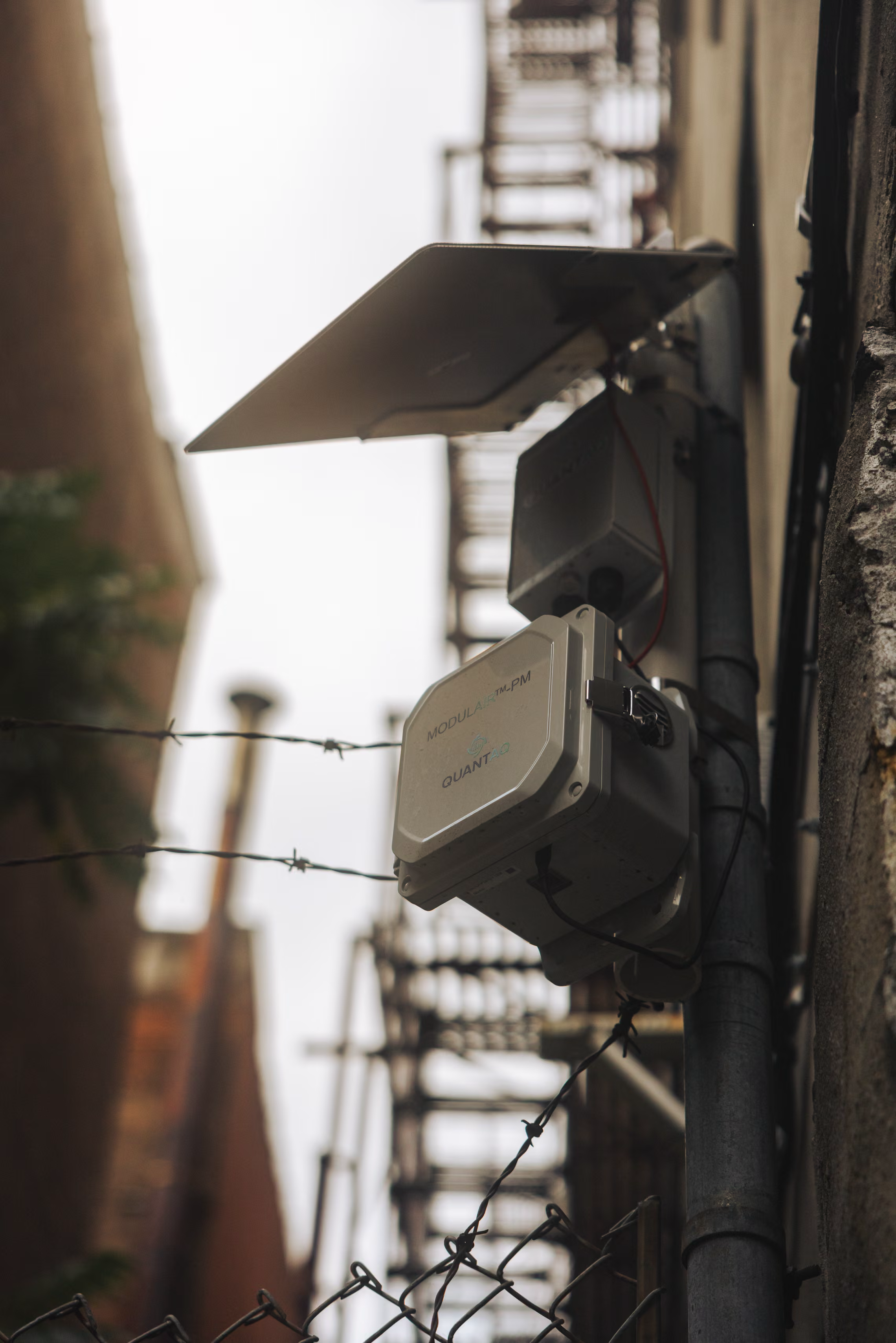
A community-managed air quality monitor in the South Bronx
The abstract states, "Although congestion pricing targets traffic emission reductions in Manhattan's Central Business District, air quality impacts may differ in surrounding neighborhoods like the South Bronx. Within a citywide context of cumulative impacts, a lack of improvement or modest increase in PM2.5 from traffic redirections to the South Bronx may compound with preexisting burdens.”
That last word matters. Compound. The Mott Haven and Port Morris community is 98% BIPOC, with a median household income of $32,000. Encircled by three highways and five bridges and surrounded by 850 acres of industrial contamination, it has among the lowest per capita access to green space in New York City. One in five school-aged children has asthma. Asthma hospitalization rates run nearly 20 times higher than the city's lowest-rate neighborhoods. Asthma death rates are three times the national average.
This is a community that cannot absorb compounding harms.
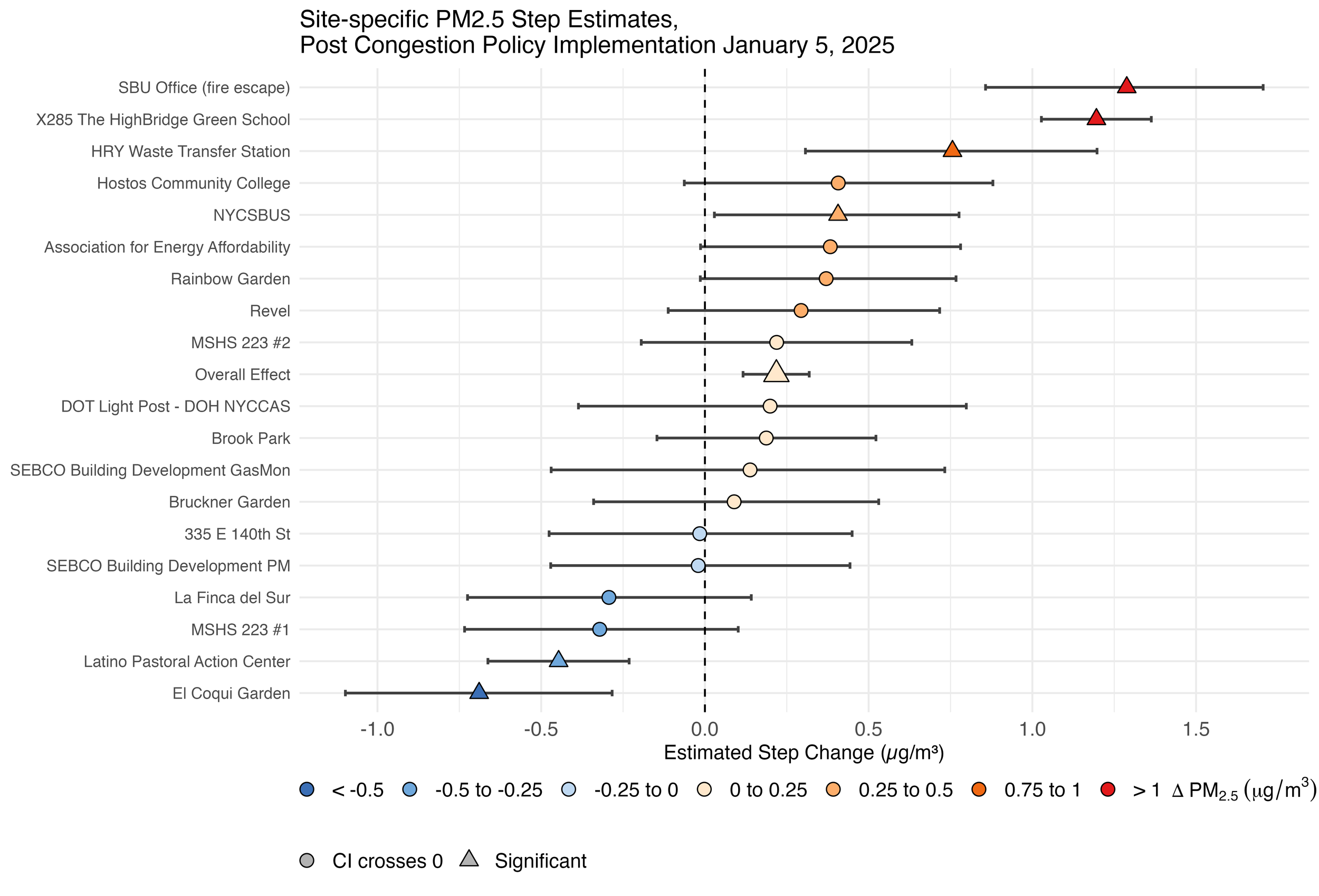
Data shows higher overall average levels of dangerous PM 2.5 in 2025 compared to 2024.
The MTA May Counter With Their Own, Limited Data
The MTA may say that they are monitoring the air in the South Bronx. In Mott Haven, where our research observed two of the highest air pollution readings, there are three New York State monitors.
They released data for only three months, and with only three monitors. Simply, that is incomplete data.
This is why we have worked for years to create a network of dozens of monitors across the South Bronx. Our monitors are able to tell a more complete story.
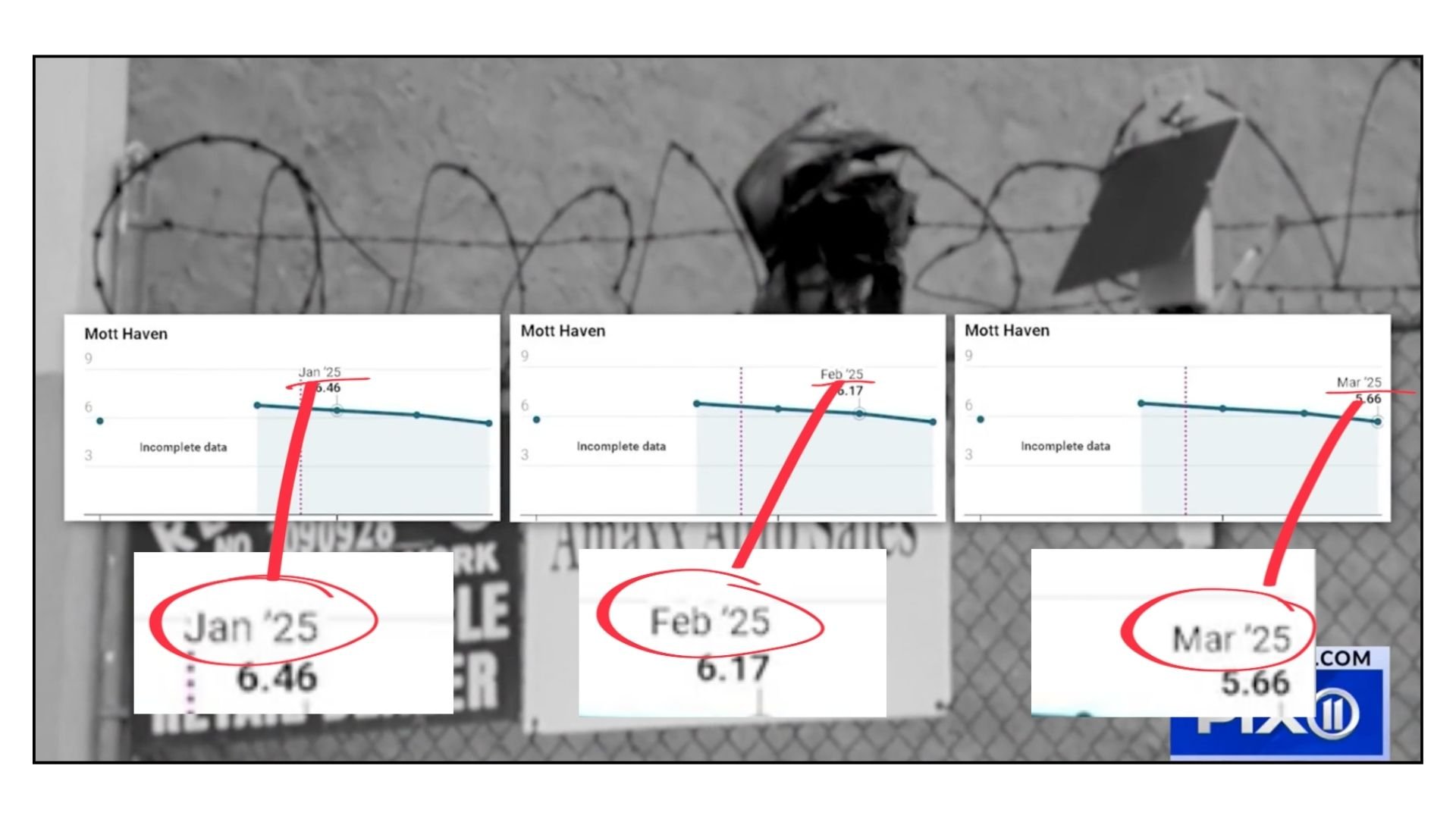
Pix 11 asked Governor Hochul about these air quality concerns in the South Bronx. This is the data her office responded with.
The MTA's Own Traffic Data Showed an Increase in Bridge and Tunnel Crossings
In addition to the concerning air quality numbers, publicly available data on MTA Bridge and Tunnel Crossings showed an uptick in traffic from 2025 compared to 2024 on 8 out of the 10 facilities they monitored citywide.
The only two locations that saw a decrease were the Hugh L. Carey Tunnel and the Queens Midtown Tunnel. These are located within or directly serving the CRZ.
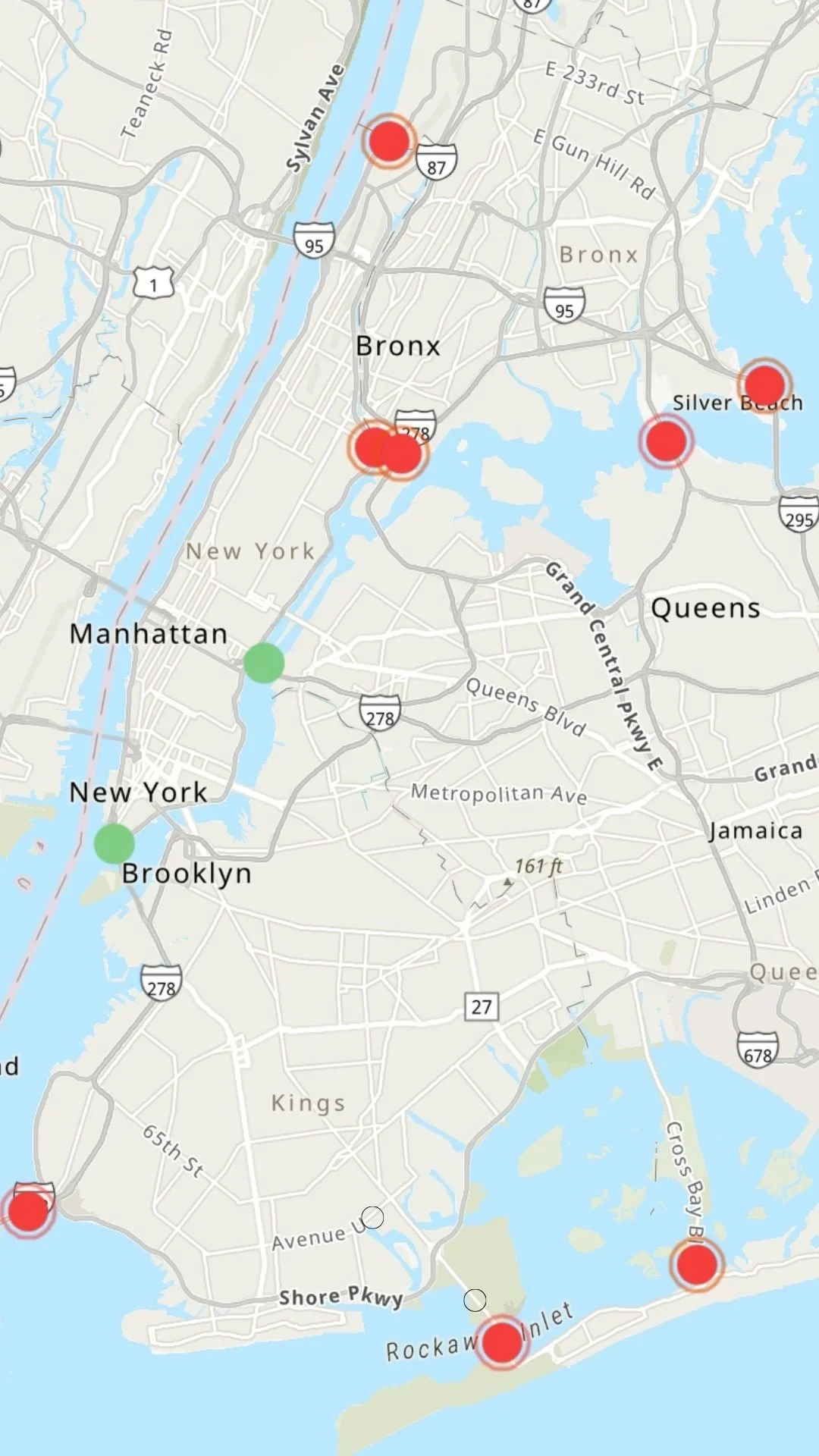
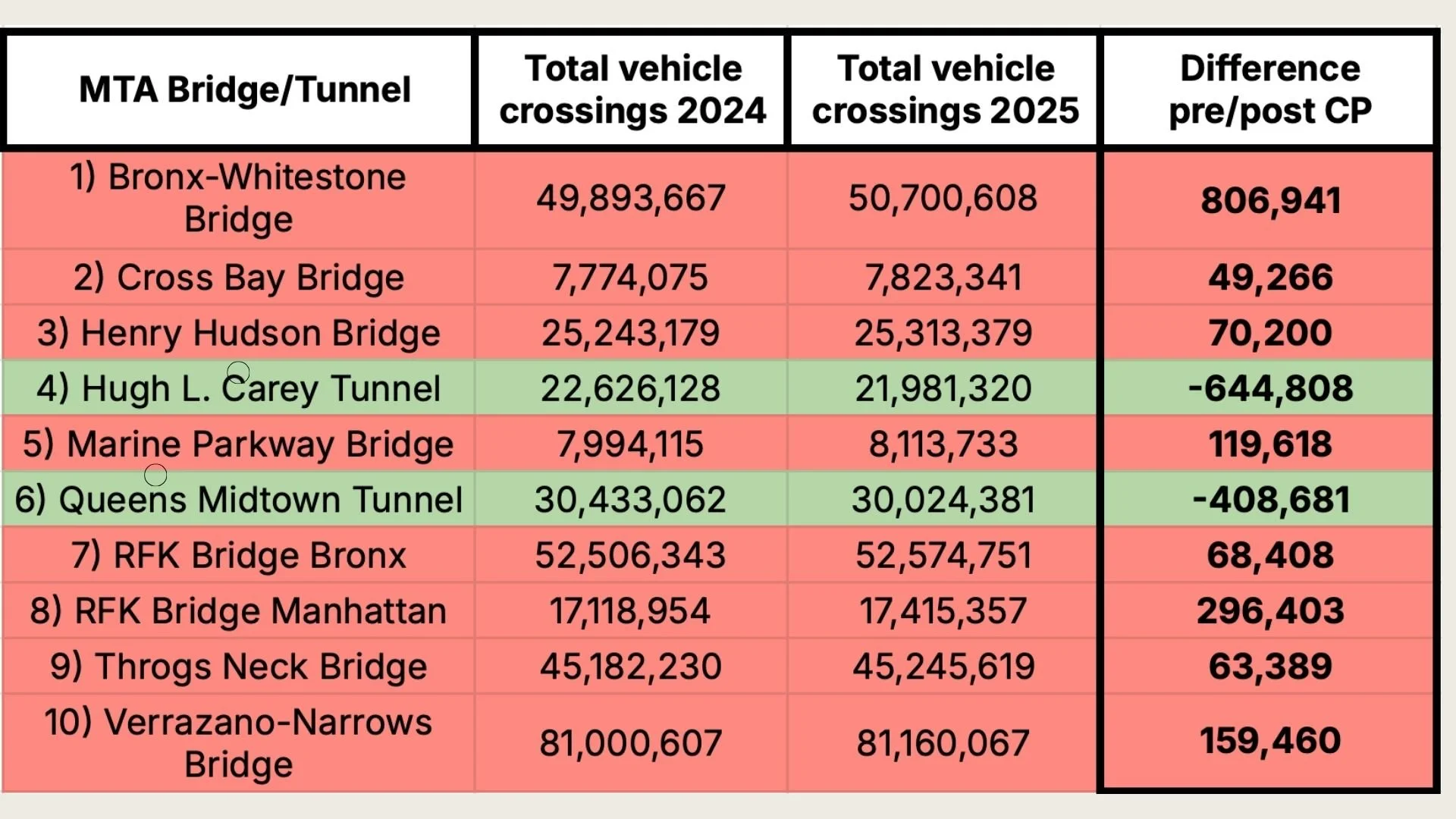
MTA bridge and tunnel crossings show increases in environmental justice communities around the city.
On the Triboro (RFK) Bridge, crossings at toll plazas increased by 360,000. That’s an average of 30,000 more vehicles per month.
Based on this data, we cannot attribute increases in traffic to congestion pricing. We can only say for certain that, on these major bridges, traffic increased.
What’s causing the harm matters, but for the people who breathe in this air every day, the children walking to school, the parents waiting for a bus, the elderly in their homes, the result is the same.
“Congestion Relief” is not happening right now for the communities that need it most.
The MTA’s “Mitigation Measures”Are Not Enough for the South Bronx
The Scale of the Problem vs. The Scale of the Response
The MTA acknowledged that certain communities, particularly in the South Bronx, bore elevated risk from traffic diversion. They proposed mitigation measures as the answer, funded by the toll revenues.
We welcome and support mitigation. But we argued then, and argue now, that mitigation should never be used to justify policies that add more pollution to communities that already struggle to breathe.
The total mitigation program is $100 million, distributed across 13 communities over five years.
The Hunts Point-Mott Haven community was allocated $23.9 million of that total.
That sounds significant until you look at what it covers and what it doesn’t.
The Hunts Point TRU Replacement Program
The single largest line item in the Hunts Point-Mott Haven mitigation allocation is $15 million for Transport Refrigeration Unit (TRU) replacement at the Hunts Point Produce Market. TRUs are diesel-powered refrigeration units on trucks and trailers. NYC DOT's previous TRU incentive program replaced only 68 units over four years. The program is also entirely opt-in, with no structured outreach or recruitment strategy. We are hopeful for success, but we want to know how this will translate to improved air quality for our communities, on what timeline, and with what accountability measures.
The Bronx Asthma Initiatives
We support investment in asthma services. This community is known as Asthma Alley for a reason.
The "Bronx Asthma Center" is not a new facility. During an internal feedback session, MTA representatives confirmed that they’re not constructing a new center in a community that needs it. The programming will be housed at the existing Tremont Neighborhood Health Action Center. This facility is convenient for Crotona-Tremont residents but not for us at the tip of the South Bronx.
Meanwhile, the Asthma Case Management Program expansion identified only two confirmed schools in Hunts Point-Mott Haven.
Air Filtration in Schools
The Draft Mitigation Plan allocates $10 million for air filtration system upgrades in schools within 300 meters of highways in eligible census tracts. We strongly support this investment. But only five schools in Hunts Point-Mott Haven received air filtration allocations, despite there being approximately 34 schools in the community, nearly all within close proximity to one or more major highway corridors.
The site selection process prioritized schools based on HVAC system compatibility and administrative engagement. Schools with older systems, often the schools with the greatest need and the least capital investment historically, may have been deprioritized because upgrades are harder.
Green Spaces
This is perhaps the starkest inequity in the Draft Mitigation Plan. The Parks and Greenspace program carries the largest allocation of any mitigation category: $25 million.
Every other Bronx mitigation community received parks funding. Hunts Point-Mott Haven received zero dollars. This is a community that already has some of the lowest green space per capita in the city.
Our air quality has worsened, and the MTA’s mitigation plan is not delivering the clean air we deserve. Where do we go from here?
Our Work Continues
We support efforts to reduce traffic and emissions across New York City. However, citywide averages and a fixation on the Central Business District must not obscure harm in surrounding neighborhoods.
In cities that have implemented a similar program, it has changed over time. It must change here too. London began with a congestion charge zone in 2003, added a Low Emission Zone targeting heavy commercial vehicles in 2008, and introduced an Ultra Low Emission Zone with stricter emissions standards in 2019.
The MTA has instituted a blunt toll and declared it a success without examining closely the impacts on the most vulnerable communities. The policy must be iterative, and those iterations must happen in dialogue with residents and environmental justice groups throughout the region.
Every neighborhood deserves clean air. The goal must be fewer polluting vehicles everywhere, not a redistribution of who breathes the worst of it.
For us, our work is clear. We keep working on our Clean Air Program.
We keep fighting for more green space.
We keep showing up for the residents of Mott Haven and Port Morris who deserve the same clean air as every other New Yorker. Now, on top of the burdens we already carry, we face another.
We are calling on the MTA to treat congestion pricing as a living policy, one subject to continuous, transparent evaluation in dialogue with the communities bearing its costs. We are calling for a mitigation process that centers South Bronx residents and community-based organizations in deciding what interventions are prioritized for our community.