
Amazon's Landlord Wants Our Waterfront. We Have a Better Plan.
A corporate warehouse developer, Prologis, is in talks to buy the former New York Post printing plant at 900 East 132nd Street. It sits on public land. This plan would threaten to bring more trucks to communities where 1 in 5 children already suffer from asthma. Our community has already envisioned a plan to use the site to create well-paying green jobs, much-needed green space, and clean energy.
Our position is simple.
No new diesel-heavy operation on our waterfront.
Public land for the public good, and not corporate profits.
Nothing about us without us.
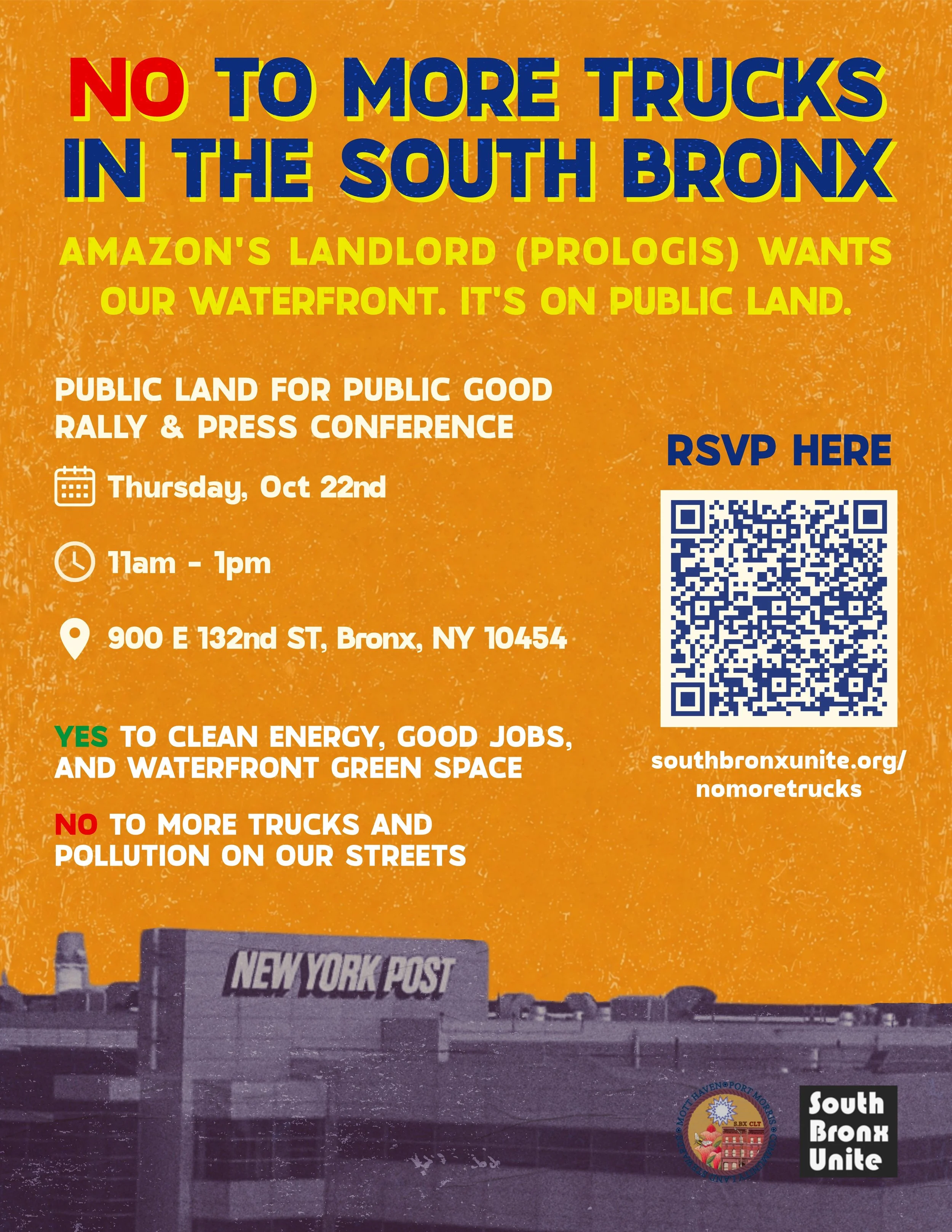
Rally and Press Conference
Thursday, October 22, 11 a.m.
Outside the Post building, 900 East 132nd Street, Bronx, at the entrance to the Randall’s Island Connector
Stop The Backdoor Deal for Our Waterfront.
The former New York Post building is a 447,000-square-foot plant on the Bronx Kill. It’s located between the neighborhood’s two gas-burning peaker plants. It has sat empty since 2021.
There have been no public announcements about a deal for the building or the land under it.
For years, we have been advocating for this site as part of the Mott Haven–Port Morris Waterfront Plan. It’s our community’s vision for a shoreline with public access, clean air and nature-based flood protection, and New York State has named it a priority project in its Open Space Plan.
In August, we launched our Energy Justice campaign with about 40 neighbors and researchers from MIT. Together we imagined what this building could become, starting with community-owned solar on its roof.
Since December 2024, Prologis has paid lobbyists to work on a project it calls “NY Post,” including “closing on ground lease” for the site. When we asked Prologis directly, the company confirmed it plans to develop the site into a warehouse.
Prologis’s biggest tenant is Amazon. This year, the company lobbied against a City Council bill that would set safety and labor standards for last-mile warehouses.
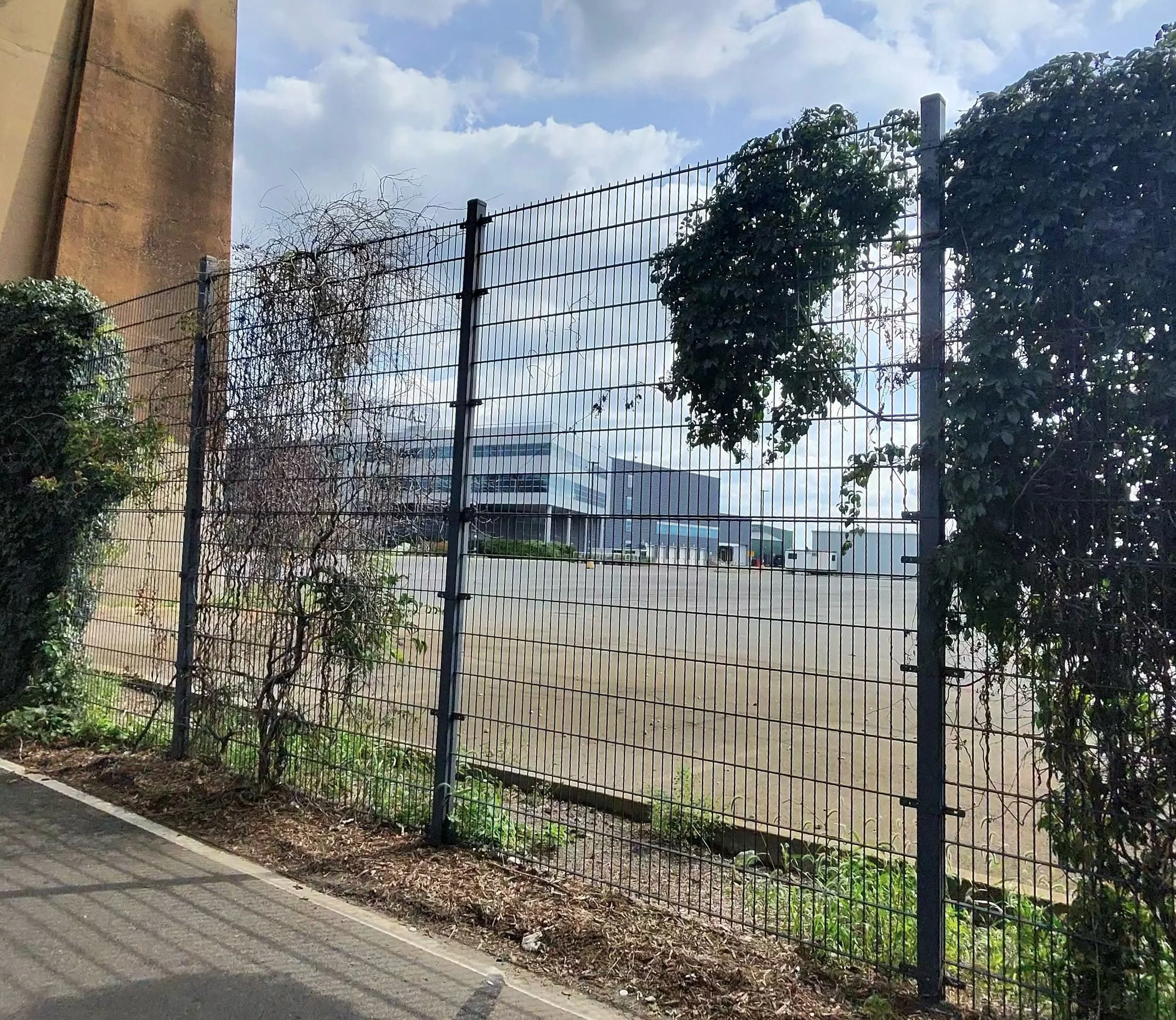
The former NY Post building, viewed from the Randall’s Island Connector.
We Cannot Bear One More Truck
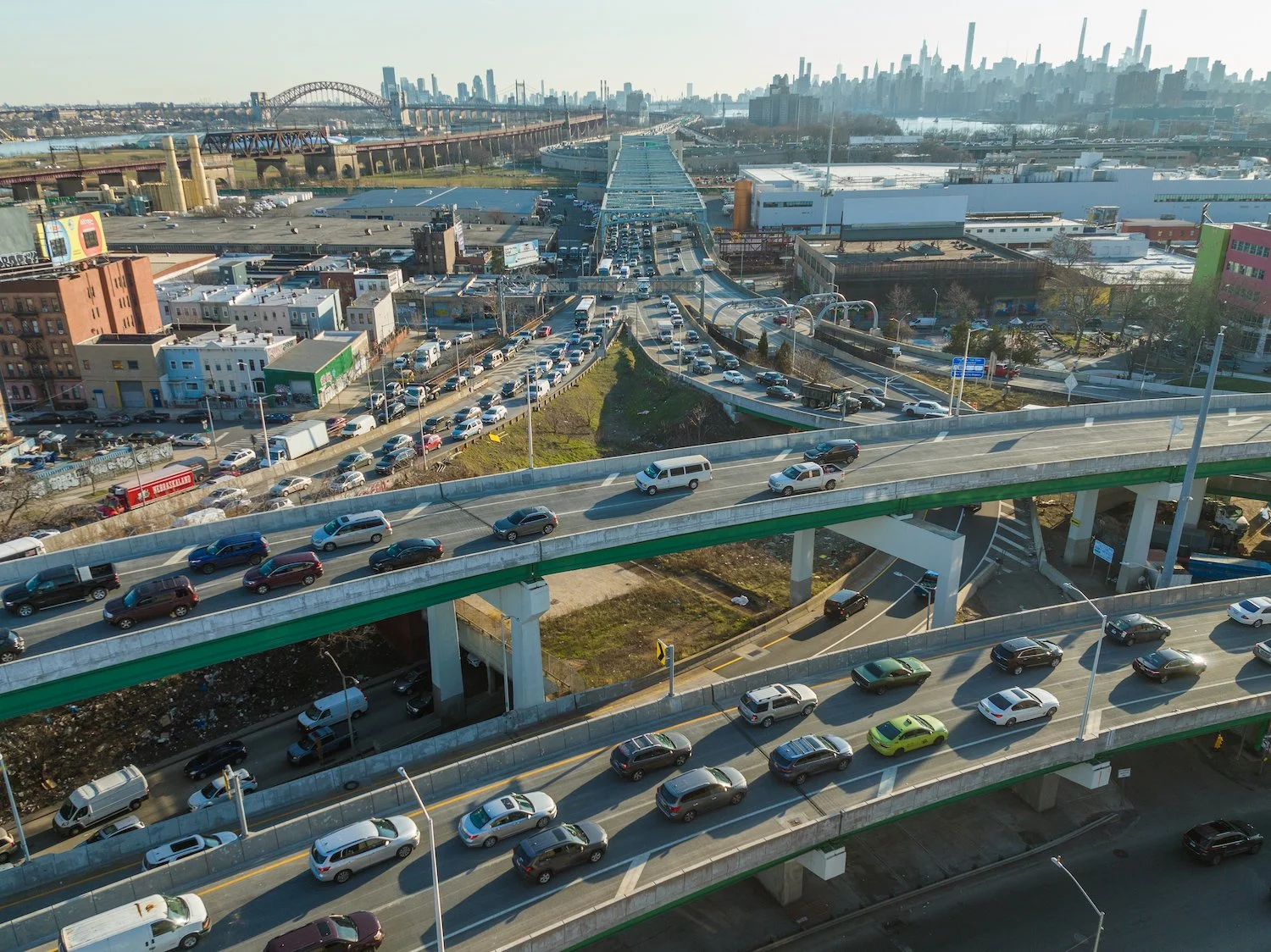
The Triboro (RFK) Bridge intersects with the Major Deegan and Bruckner Expressway along the South Bronx waterfront.
Mott Haven and Port Morris already carry more than our share. We're surrounded by three highways and five bridges. The South Bronx is home to the city’s largest Significant Maritime and Industrial Area (SMIA). Our waterfront holds gas-burning power plants, multiple waste transfer stations and truck-heavy distribution hubs.
We pay for it with our health. Children in Mott Haven and Hunts Point are hospitalized for asthma at twice the citywide rate. Adults go to the emergency room for asthma at nearly three times the citywide rate.
Delivery warehouses mean trucks. A 2025 report from City Comptroller Mark Levine reported that last-mile warehouses of the size common in New York City can draw up to 1,000 truck trips a day.
In 2021, Rep. Ritchie Torres brought together the Bronx Democratic delegation to write a letter warning of "imminent public health and environmental risks" if this exact site were used for last-mile warehousing. Now we know the threat of last-mile warehousing here is real.
Tell the State: Do Not Sell Public Land
South Bronx Unite has been working with attorneys and commissioned a title report to find out who owns the land under the Post building. We found that part of the building, and all of its parking lot, sit on land owned by the New York State Department of Transportation. We didn’t find any recorded agreement allowing the building to be there.
That land also comes with strings attached. In 1995, legal conditions tied its use to the rail yard and the public benefit it was supposed to bring.
This deal threatens to continue a cycle of harm rooted in the selling-off of our public waterfront land.
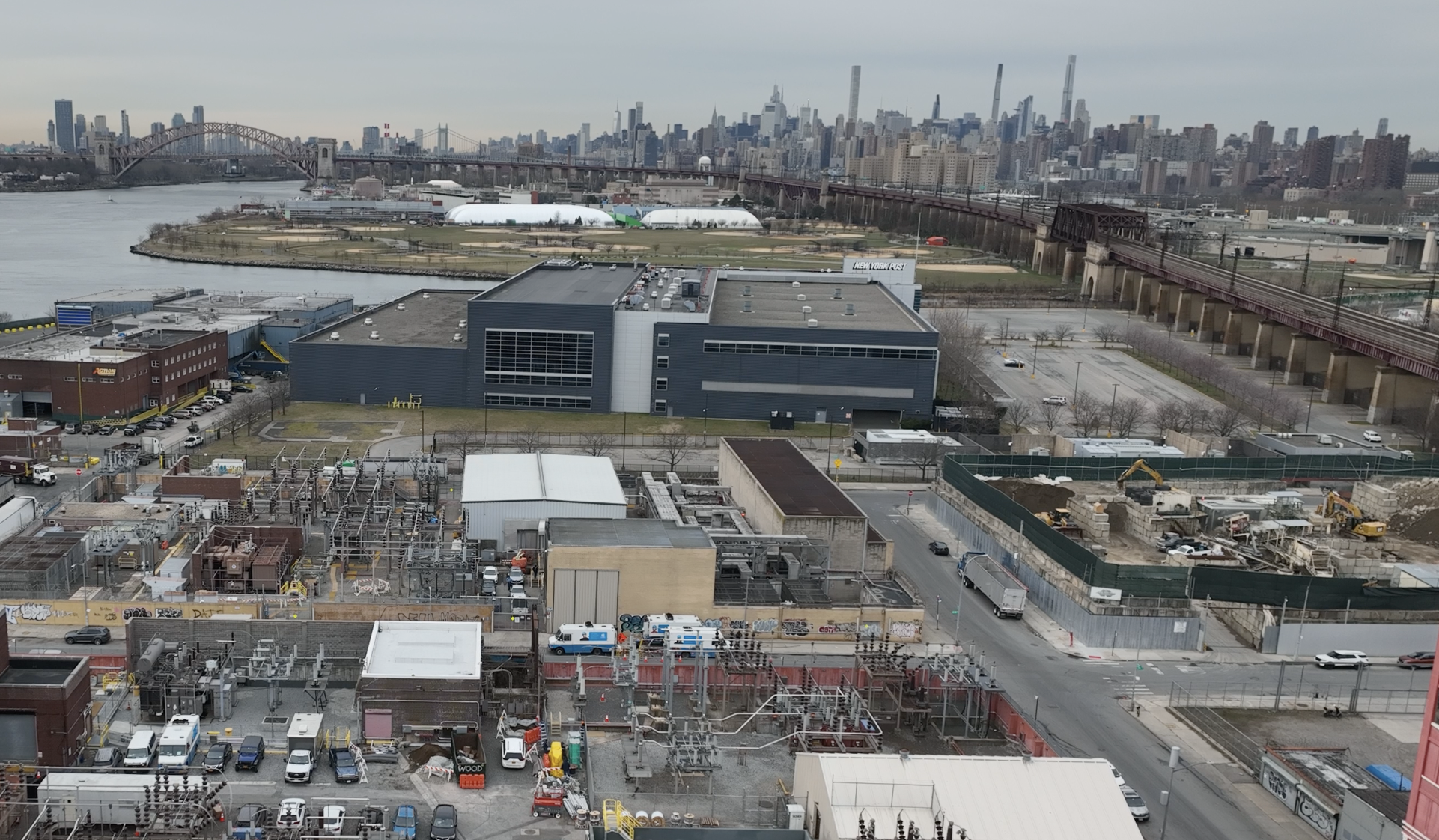
The former NY Post Building and its parking lot on the Bronx Kill waterfront.
We Paid for This Land to Get Trucks Off Our Streets. We Got More Trucks.
In 1982, the State acquired the rail yard on the Bronx Kill to build a freight terminal that would move goods by train instead of by truck.
In 1991, the State leased the yard for 99 years to a private developer, Harlem River Yard Ventures, part of the Galesi Group.
By 1997, $213 million in public dollars had gone into the yard and its rail link. That year, the State Comptroller found that “little economic benefit has been realized” and that most of the benefit from the public’s investment would “effectively benefit the private lessee, who assumes little or no risk in this project.” The Comptroller also found that the 99-year lease “equates to a transfer of ownership,” and that the State had “essentially transferred ownership” of the yard to Galesi’s company.
In 1999, a State agency paid the MTA $11.5 million for a bus garage next to the yard and sold it the same day to Galesi’s company for $3.5 million, $8 million less than it paid. The promise was a new printing plant for the New York Post. Most of the Post building stands on that land today. Now the plant is empty, and the next deal could turn it into a warehouse.
The rail yard was leased out on the promise of better transportation and environmental outcomes, and it delivered the opposite. Instead of taking trucks off our streets, it filled up with diesel-heavy businesses: a FedEx distribution center, a major waste transfer station and a FreshDirect distribution center.
The public has kept paying for pollution. FreshDirect came in 2012 with a $127.8 million package of public cash and tax breaks. That’s when South Bronx Unite was born. We took the deal to court and lost. After FreshDirect opened in 2018, a Columbia University study found that traffic congestion rose significantly in the blocks around it.
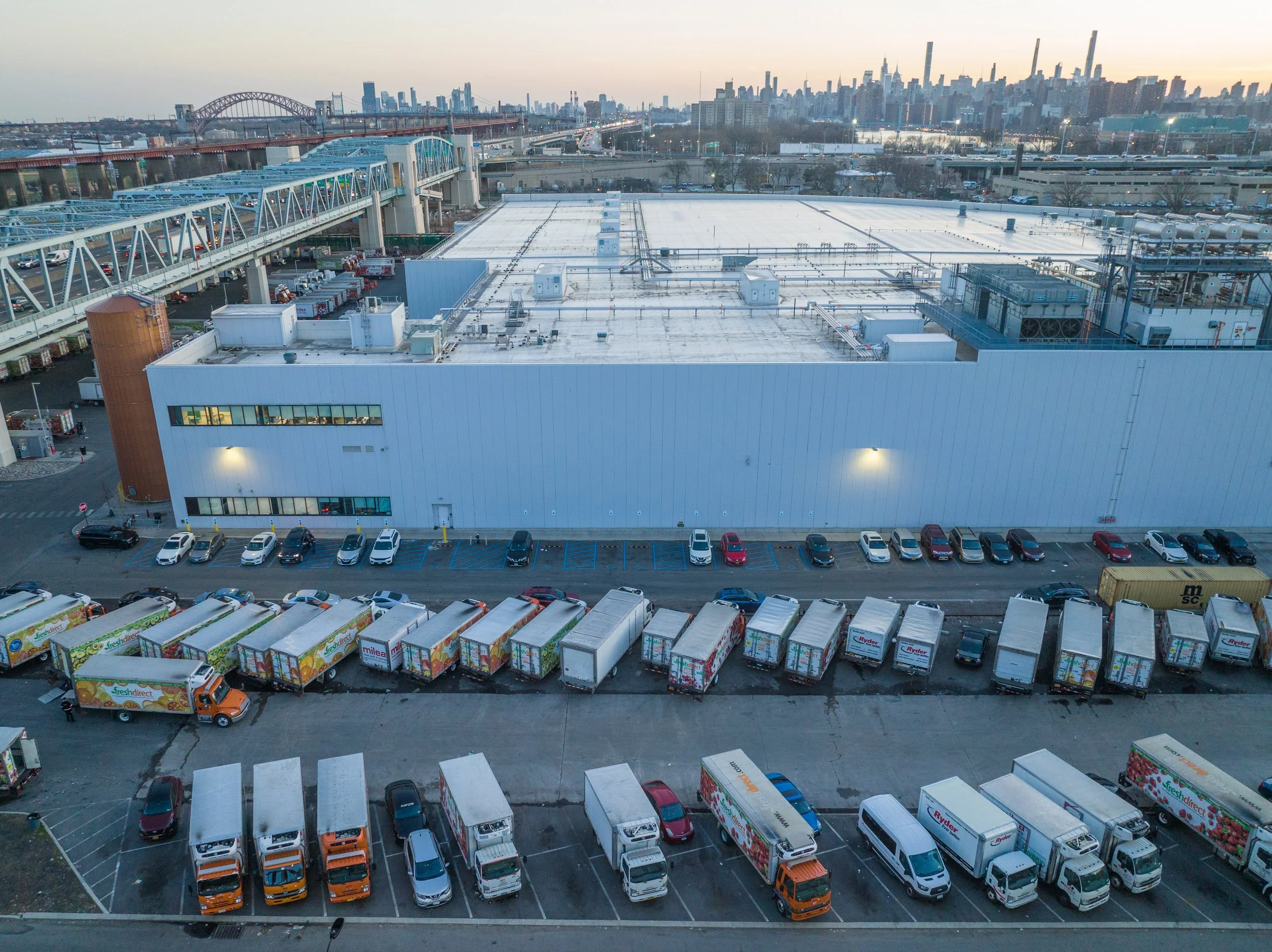
FreshDirect trucks lined up outside the last mile warehouse on our public waterfront land.
NO “Bluewashing” of Our Waterfront
Bluewashing (n.): Greenwashing for the waterfront. It’s when a company sells a polluting project with promises about the water (less freight on streets, flood protection, public access) that never arrive, and the community is left to pay the price.
Every one of these deals promised something for the public. Instead, we got more trucks, more pollution and more damage to our children’s health.
Now Prologis has tied its plans to Blue Highways, the City’s effort to move freight off trucks and onto the water. This is the same promise this land was bought on in 1982. Using a good climate program as cover for a project that would make things worse is what we call bluewashing.
We support moving freight by water. That does not change our answer. No new diesel-intensive operation belongs on this waterfront, and neither does any project planned without the people who live here.
Prologis’s own lobbying record shows what it’s focused on. This year, they lobbied against a City Council bill that would set safety and labor standards for last-mile warehouses. That’s the record of a company securing a site and fighting the rules for warehouses, not one planning to take trucks off our streets.
Meanwhile, the warehouse is the only guaranteed part of this plan. No one has committed money or a timeline for the piers and barges this site would need. And even if the boats come, the goods still have to leave the building for our streets. No one has said how many trucks and vans that means. No one has known about this plan until now.
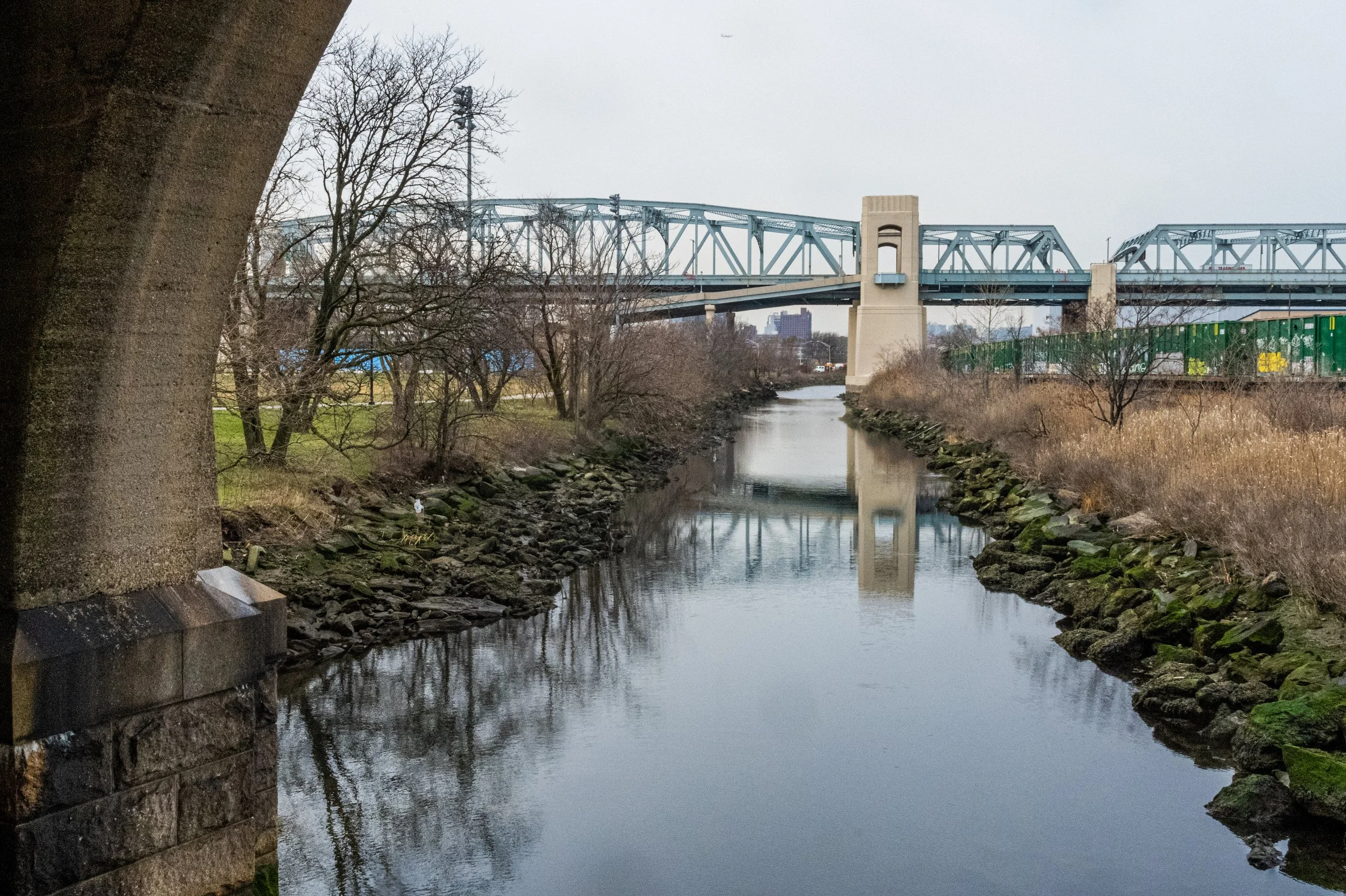
The rail yard leased out to Harlem River Yards Ventures (Galesi) has blocked us off from access to the Bronx Kill.
No More Broken Promises
This waterfront has a long history of broken promises. Prologis’s plan would add one more, and lock in decades of diesel trucks in a community that cannot take more compounding harm. Our 2026 air quality study with researchers from Columbia, Brown and the University of Colorado Boulder warned that even a “modest increase in PM2.5 from traffic redirections to the South Bronx may compound with preexisting burdens.”
And the trucks are only part of the problem. Even if every truck were electric, even if there were no trucks at all, this would still be a corporate warehouse blocking our waterfront for decades, on land that belongs to the public. Public land should serve the public good, not a corporation’s bottom line.
Our Plan: Clean Power, Good Jobs, Our Waterfront Back
Residents working with South Bronx Unite have spent the past year planning a different future for this building, drawing on extensive research by Zoe Voss Lee at MIT and Working Power. The Post building could:
Lower energy bills with clean power. Community co-owned solar on the roof, about twice the size of Sunset Park Solar, with battery storage on the grounds. Early estimates show that building rooftop solar could deliver 20% bill discounts to about 300 local households.
Train people from here for real jobs. Job training and green manufacturing inside the building. We want our neighbors trained for the well-paying jobs of the future, not another warehouse that fills our streets with trucks and fights the rules meant to keep its workers safe.
Protect us from flooding. Green infrastructure along the Bronx Kill could protect our shoreline from future storms.
Give us all waterfront access. The massive parking lot, which sits on public land, could become green space that opens the shoreline to all of us.
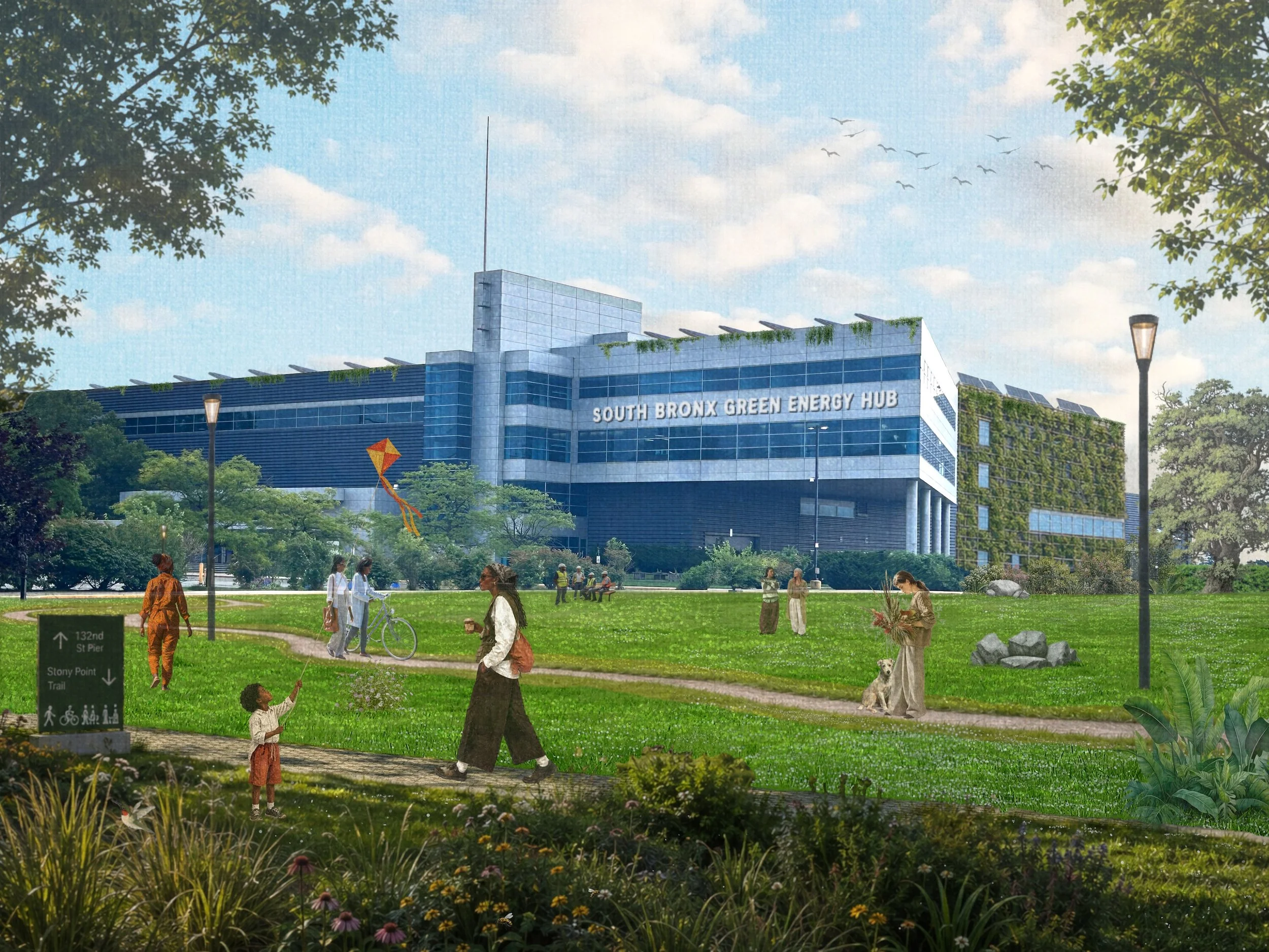
Held by the Community, for Good
The land would stay in community hands through the Mott Haven–Port Morris Community Land Stewards. The Land Stewards is our neighborhood’s community land trust and an independent nonprofit. A land trust takes land off the speculative market for good, so it can’t be flipped to the highest bidder. Anyone who lives or works in Mott Haven or Port Morris can become a member. We know this is possible because of what our community accomplished through the redevelopment of the former Lincoln Detox Center into the HEArts Center. For years, we were told it was impossible. But this past September, we broke ground on this historic project. We can do it again, and we must do it again.
Prologis’ plan for the site is a model we have seen here before. It's a model that is harming communities around the world whose rights to clean air, water, and opportunity have been blocked by corporations. The fight for the Post Building is a fight for our future.
Our Demands
We're calling on Governor Kathy Hochul, the State DOT, and City to:
Stop the backdoor deal. No lease, sale or other agreement touching State land at this site without public disclosure and full community review.
No more last-mile warehouses on the South Bronx waterfront, starting with the Post building.
Protect the public's land. The State should confirm it still owns the land under the building, and use it to serve the public good.
Invest in the community's plan, starting with a feasibility study in the State's FY2028 Executive Budget.
Sign our petition to Governor Hochul and State DOT Commissioner Marie Therese Dominguez.
Press Contacts
If you’re a member of the press interested in covering this story, reach out to our team members.
David Rosales, david@southbronxunite.nyc
Zoe Voss Lee, zoe@southbronxunite.nyc
We have lobbying filings, title records, the 1999 Comptroller report and site photos available on request. We can do Spanish-language interviews.